

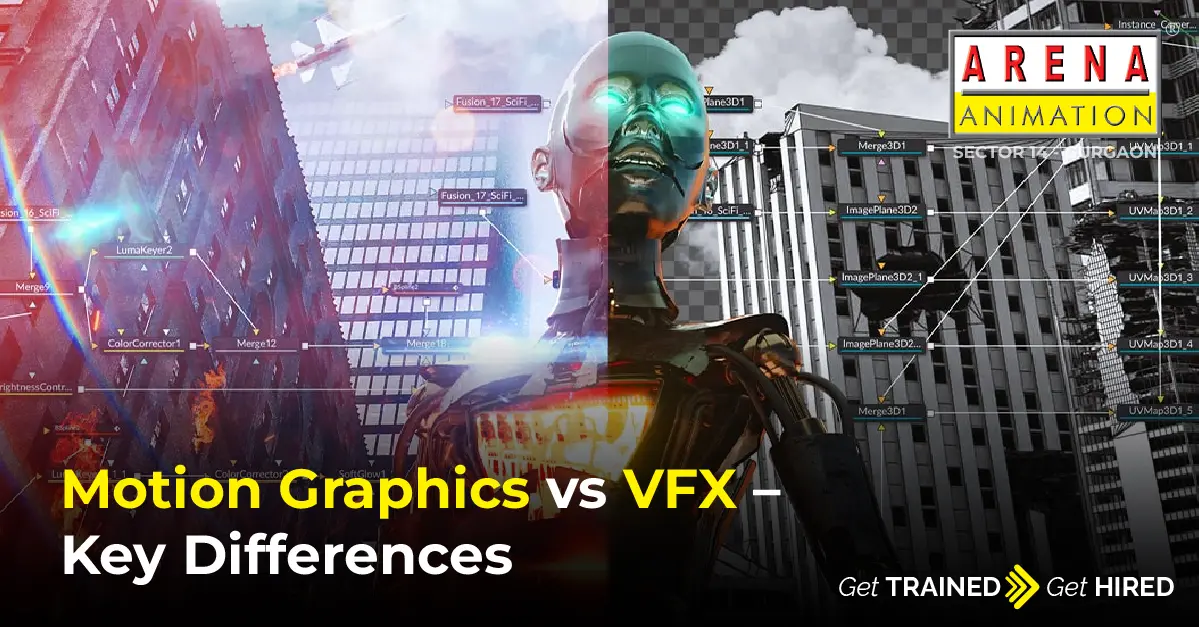
Motion Graphics and VFX are both part of the animation and video world. Many beginners get confused between these two because both use animation and visual effects. But in reality, they serve different purposes and follow different creative approaches.
If you are planning to build a career through professional Animation and VFX programs, understanding this difference will help you choose the right learning path.
What Is Motion Graphics?
Motion graphics means moving graphics. It mainly focuses on animating text, shapes, icons, and simple design elements to explain ideas clearly and creatively.
Motion graphics are widely used in ads, explainer videos, YouTube intros, social media videos, branding content, and corporate presentations. For example, animated logos, moving text, charts, and icons all fall under motion graphics.
Students learning through structured courses like Motion Graphics training programs gain strong skills in visual storytelling, typography animation, and digital communication.
What Is VFX?
VFX stands for Visual Effects. It is used to add elements to real video footage that cannot be captured during shooting. VFX helps create scenes that look realistic, dramatic, and cinematic.
Explosions, fire, smoke, monsters, space scenes, fantasy worlds, and superpowers you see in movies and web series are created using VFX.
Professional learning paths like VFX filmmaking programs and VFX compositing & editing programs train students in advanced effects creation.
Main Difference Between Motion Graphics and VFX
The biggest difference lies in their purpose.
Motion graphics focus on presenting information in a clean and creative way, while VFX focuses on adding realism and cinematic depth to live videos.
Motion graphics often start from scratch using text and design, whereas VFX usually works on real video footage and enhances it using visual effects.
Style and Visual Look
Motion graphics have a clean, flat, and design-oriented look. They rely on colors, shapes, smooth movement, and creative layouts.
VFX focuses on realism. Every element must match lighting, shadows, camera angles, and physics to make scenes look natural.
Software Used
Motion graphics artists commonly use Adobe After Effects, Cinema 4D, and Illustrator.
VFX artists use advanced software like Blender, Autodesk Maya, Nuke, Houdini, and professional compositing tools taught in advanced VFX programs.
Difficulty Level
Motion graphics is easier for beginners because it focuses more on design and simple animation.
VFX is technically complex. It requires strong understanding of lighting, camera movement, tracking, and realism. Many learners first master motion graphics and then shift toward VFX.
Career Opportunities
Motion graphics artists usually work in:
- Advertising agencies
- Digital marketing companies
- Branding studios
- Social media production teams
VFX artists mostly work in:
- Film production studios
- OTT platforms
- Gaming companies
- Visual effects studios
Advanced career tracks such as 3D Motion Graphics Prime and Animation VFX Gaming Prime help students access premium roles.
Which One Should You Choose?
If you enjoy typography animation, design layouts, ads, and creative storytelling, motion graphics is a great choice.
If you love movies, cinematic scenes, realistic effects, and action visuals, then VFX is a better path.
Final Thoughts
Motion Graphics and VFX are different, but both are essential in modern media. Motion graphics help explain ideas clearly, while VFX creates powerful cinematic experiences.
Choose the field that fits your interest, practice daily, and build your skills step by step. With dedication and learning from expert-led Animation and VFX programs, both fields can lead to a rewarding creative career.